
Medically Reviewed by Michael G. Wierschem, MD, MBA, FACS | Last updated:9/23/2026
Key Takeaways
- Low testosterone is diagnosed from symptoms plus at least two early-morning blood tests, not from symptoms alone.
- The most specific signs are sexual: lower sex drive, fewer morning erections and erection problems.
- Fatigue, low mood, belly fat and muscle loss are common with low testosterone, but they have many other causes too.
- Low testosterone can contribute to erectile dysfunction, but most ED has other causes, so both should be checked together.
- Treatment depends on the cause. Weight, sleep and medications come first, and testosterone therapy is considered only after the diagnosis is confirmed.
Testosterone does more than drive muscle and sex drive. It helps maintain energy, mood, bone strength, red blood cell production and body composition. When levels fall too low, the changes are often gradual enough that men blame age, stress or a busy schedule.
The Urology Care Foundation estimates that about 4 in 10 men over age 45 have low testosterone. Not every one of them has symptoms, and not every man with symptoms has low testosterone. That is why the signs below are a reason to get tested, not a diagnosis on their own.
What Counts as Low Testosterone?
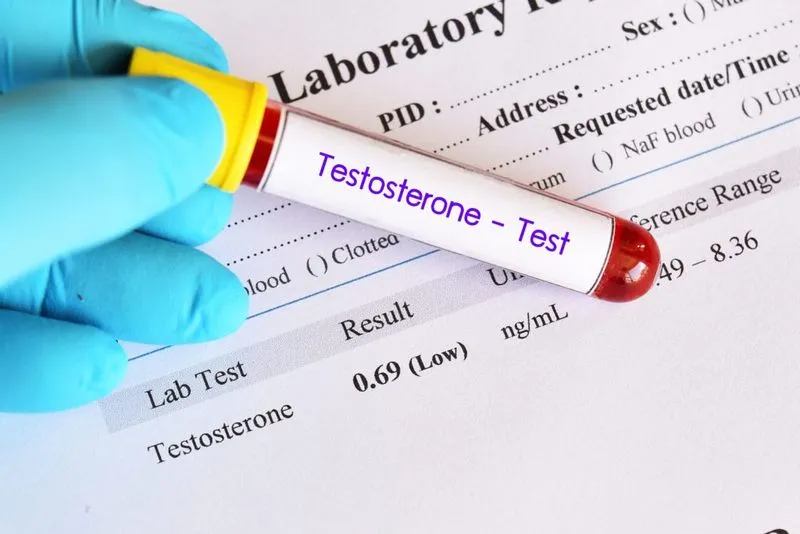
Low testosterone, also called testosterone deficiency or male hypogonadism, means the testicles are not producing enough testosterone, or the brain is not sending the signals that tell them to. The American Urological Association (AUA) defines it as a total testosterone level below 300 ng/dL on at least two separate early-morning blood tests, together with symptoms.
Timing matters. Testosterone peaks in the morning and can run about 20% lower by late afternoon, and a single result can be thrown off by illness, poor sleep or the lab method. One low number is a starting point, not an answer.
The 6 Signs of Low Testosterone
A large European study of aging men found that sexual symptoms are the ones most closely tied to low testosterone, so the list starts there.
1. Lower Sex Drive
A lasting drop in interest in sex is one of the most common and most specific signs. Desire naturally rises and falls with stress, sleep and relationships, so the pattern matters. A change that lasts for weeks or months, and that you cannot explain, is worth checking. Testosterone is the main hormone behind libido, which is why desire is often the first thing to change when levels fall.
2. Fewer Morning Erections and Weaker Erections
Fewer spontaneous or morning erections is a classic early clue. Some men also notice erections that are harder to get or keep. Testosterone supports the signaling involved in an erection, but erections depend mostly on healthy blood flow, so low testosterone is only one possible cause. The ED section below explains how to tell the difference.
3. Fatigue and Low Energy
Many men with low testosterone describe feeling drained even after a full night of sleep, or losing the drive to exercise or push through the workday. On its own, fatigue is one of the least specific signs, because poor sleep, sleep apnea, thyroid problems, anemia, depression and many medications cause it too. It means more when it shows up alongside the sexual signs above.
4. Low Mood, Irritability and Brain Fog
Low testosterone is associated with depressed mood, irritability, lower motivation and trouble concentrating. These changes tend to creep in slowly, so the people around you may notice them first. Mood symptoms deserve attention on their own terms, since depression can both mimic low testosterone and lower it. If you are struggling with your mood, raise it with your doctor directly, whatever your testosterone level turns out to be.
5. Less Muscle, More Belly Fat
Testosterone helps build and maintain lean muscle. When levels fall, men often notice lower strength, slower recovery from workouts and more fat around the midsection, even without changes to diet or training. The relationship runs both ways. Abdominal fat converts testosterone into estrogen and suppresses the signals that tell the testicles to make more, which is why losing weight can raise testosterone in men who are overweight. It is also why a medical weight loss program is sometimes the first step rather than hormones.
6. Physical Changes: Body Hair, Breast Tissue and Bones
Some signs are physical and easy to overlook: thinning beard or body hair, including armpit and pubic hair; tender or enlarged breast tissue (gynecomastia); smaller or softer testicles; hot flashes; and, over years, thinner bones that break more easily. These are less common than the signs above, but they point more strongly to a true hormone problem, so mention them to a doctor even if nothing else has changed.
What about hair on your head? Male pattern baldness is driven mainly by genetics and sensitivity to DHT, a hormone made from testosterone, not by low testosterone. Our guide on whether low testosterone causes hair loss covers it in more detail.
Does Low Testosterone Cause ED?
It can contribute, but it is rarely the only cause. Erections depend mainly on healthy blood vessels and nerves, so the most common causes of erectile dysfunction are conditions that affect blood flow, such as diabetes, high blood pressure and high cholesterol, along with smoking, some medications and stress. Low testosterone mainly lowers desire, and it can make erections weaker and less frequent.
Three points from the AUA guideline on erectile dysfunction shape how a urologist approaches it:
- Every man with ED should have a morning testosterone level checked.
- ED can be an early warning sign of heart disease and other health conditions, so it deserves a full evaluation, not just a prescription.
- In men with both ED and confirmed low testosterone, ED medications may work better when the low testosterone is treated too.
How do you know if ED is from low testosterone?
You cannot tell from symptoms alone, and many men have more than one factor. Low desire alongside the erection problem, plus fewer morning erections, points toward testosterone. Normal desire with weaker erections, plus risk factors such as diabetes, high blood pressure or smoking, points toward blood flow. Testing answers the question. Testosterone therapy is not a treatment for ED in men whose testosterone is normal.
Erection changes deserve a real answer. Our urologist-led team checks testosterone, blood flow and the other common causes together, so treatment targets what is actually going on.
Erectile Dysfunction
Erection changes deserve a real answer
Our urologist-led team checks testosterone, blood flow and the other common causes together, so treatment targets what is actually going on.
Low Testosterone or Something Else?
Many conditions cause the same symptoms, and some of them also lower testosterone. A good evaluation looks for them before blaming hormones:
- Obstructive sleep apnea or chronically short sleep
- Excess weight and type 2 diabetes
- An underactive thyroid
- Depression and long-term stress
- Anemia
- Heavy alcohol use
- Medications, especially opioids, and past anabolic steroid use
- A recent illness, which can lower testosterone temporarily
Treating one of these sometimes brings testosterone back up without hormone treatment. For a closer look at the causes, read what causes low testosterone in men over 40.
Signs of Low Testosterone by Age
In your 20s and 30s. Low testosterone is less common at this age, so it calls for a careful look at the cause, such as a pituitary or testicular problem, medications or past steroid use. Fertility plans matter most here, because testosterone therapy can lower sperm production.
40 and older. Testosterone declines gradually with age, by roughly 1% a year from around 40. Symptoms at this stage overlap with weight gain, poorer sleep and other midlife changes, which is exactly why testing beats guessing.
How Low Testosterone Is Diagnosed
- A conversation about your symptoms, medications, sleep, alcohol use and whether you may want children.
- A physical exam.
- At least two early-morning total testosterone tests, ideally at the same lab, and not during an illness.
- Follow-up tests when levels are low, such as LH, prolactin and a blood count, to find out why and to make any treatment safe.
This is also why a single at-home or afternoon test result should be confirmed before any treatment decision.
Treatment Options for Low Testosterone
- Treat the cause first. Losing weight, treating sleep apnea, reviewing medications and cutting back on alcohol can raise testosterone on their own. Our guide on how to increase testosterone covers the lifestyle side.
- Testosterone replacement therapy (TRT) for confirmed deficiency, given as injections, gels or creams, or pellets. Improvement tends to be strongest for sex drive, while changes in energy and mood vary from man to man. Learn more about testosterone replacement therapy in Dallas.
- If you may want children, say so before starting anything. Testosterone therapy can lower sperm production, and there are other approaches for men who want to protect fertility.
- If erections are the main concern, ED treatment may be needed alongside hormone treatment, or instead of it.
Over-the-counter “testosterone boosters” have little evidence behind them, and some contain ingredients that are not listed on the label.
Think your testosterone might be low? Find out with proper testing. Our physician-led TRT program starts with a full evaluation and recommends treatment only when your results support it.
Testosterone Therapy
Think your testosterone might be low?
Find out with proper testing. Our physician-led TRT program starts with a full evaluation and recommends treatment only when your results support it.
When to See a Doctor About Low Testosterone
Book an evaluation if:
- You have had two or more of the signs above for more than a few weeks
- You notice lower desire together with erection changes
- You have physical signs such as breast tissue changes or smaller testicles
- You were told your testosterone is low based on a single test or an at-home kit
- You are considering testosterone therapy and want to protect your fertility
Get your testosterone checked in Dallas. One visit with our urologist-led team can tell you whether low testosterone is behind your symptoms, and what to do about it if it is.
Dallas Men’s Health
Get your testosterone checked in Dallas
One visit with our urologist-led team can tell you whether low testosterone is behind your symptoms, and what to do about it if it is.
Frequently Asked Questions
Does low testosterone cause erectile dysfunction?
It can contribute. Low testosterone mainly reduces sex drive and can make erections weaker and less frequent. Most erectile dysfunction, though, comes from problems with blood flow, nerves, medications or stress, so the AUA recommends checking testosterone in every man with ED while also looking for those other causes.
How do I know if my ED is caused by low testosterone?
Only testing can tell you. Low desire and fewer morning erections alongside the erection problem point toward testosterone. Normal desire with weaker erections, plus risk factors such as diabetes or high blood pressure, points toward blood flow. Many men have more than one factor.
What is a normal testosterone level for men?
Labs report different reference ranges, so the number on your report is not the same as a diagnosis. The AUA uses a total testosterone below 300 ng/dL on at least two early-morning tests, together with symptoms, as the threshold for testosterone deficiency.
Can you have low testosterone in your 20s or 30s?
Yes. It is less common in younger men, which is why a doctor will look harder for a specific cause, such as a pituitary or testicular problem, medications or past steroid use. Fertility plans are especially important to discuss before any treatment.
Does low testosterone cause hair loss?
Low testosterone can thin beard and body hair. Male pattern baldness on the scalp is driven mainly by genetics and sensitivity to DHT, not by low testosterone.
Can low testosterone go back to normal?
Sometimes. When low testosterone is caused by excess weight, sleep apnea, a medication or a recent illness, treating that cause can bring levels back up. Low testosterone caused by a problem in the testicles or pituitary gland usually needs ongoing treatment.
Will testosterone therapy fix erectile dysfunction?
Not usually on its own. Testosterone therapy tends to improve sex drive more than erections. In men with confirmed low testosterone, it may help ED medications work better. In men with normal testosterone, it is not a treatment for ED.
Do testosterone boosters work?
There is little good evidence that over-the-counter testosterone boosters raise testosterone in a meaningful way, and some products contain ingredients that are not listed on the label. Proper testing is a better first step.
Sources
- Burnett AL, et al. Erectile Dysfunction: AUA Guideline. Journal of Urology, 2018.
- Mulhall JP, et al. Evaluation and Management of Testosterone Deficiency: AUA Guideline. Journal of Urology, 2018.
- Wu FCW, et al. Identification of Late-Onset Hypogonadism in Middle-Aged and Elderly Men. New England Journal of Medicine, 2010.
- Snyder PJ, et al. Effects of Testosterone Treatment in Older Men. New England Journal of Medicine, 2016.
- Urology Care Foundation. Low Testosterone.
- Cleveland Clinic. Low Testosterone (Male Hypogonadism).